A football dream rarely starts under a television camera. It starts in scuffed trainers on a patch of grass that leans, drains badly, and still feels like home.
The lesson comes early: the game is bigger than any one kid, and the people who keep it running matter as much as the ball.
Soon, the pathway splits. One player gets noticed at a county match, another grinds through non-league, and a third grows up in an academy where every session is filmed and timed.
Different roads, same demand: be ready when the right moment opens.
The ground beneath the dream
Grassroots football is infrastructure disguised as routine. A playable pitch, safe changing rooms, and a coach who shows up every week can keep talent alive long enough to mature. When facilities slip, it doesn’t end with drama; it frays into missed sessions and frustration.
That is why the unromantic work matters. The FA’s grassroots strategy for 2024-2028 puts improving pitches and facilities at the centre, because the first “stadium” for most players is a community ground, not a tunnel at Wembley.
The scout’s notebook has gone digital
Scouting is less trench-coat romance now and more signal detection. A clip arrives on a phone, a data profile follows, and a trial often comes down to repeated decisions: scanning, positioning, choosing the simple pass under pressure. In academies, pressure is rehearsed with a programme that treats training and education as one system.
In England, the Premier League’s Elite Player Performance Plan was introduced in 2012 with the stated aim of producing more and better homegrown players, tightening the pathway from youth development to senior football.
Odds and ambition: when fans price the story
Football culture now travels with a second screen. It sits in the stands and in group chats where team news is treated like currency. For young players, that attention is both fuel and noise, because even a local standout can be discussed through the language of stats and momentum.
By the time the warm-up finishes, the match has already been priced. A fan who wants that movement in real time often starts with apk melbet, then keeps the focus on the markets that match what is happening on the pitch. Live betting is built on small moments: a full-back on a yellow, a tiring midfield, a corner count that keeps climbing. It can make watching sharper, because details stop hiding in the background.
Three markets show how football conversation and betting language overlap:
- Total goals, when tempo and finishing quality tell a story early
- Both teams to score when a match-up looks open at both ends
- Corners or cards, when the referee and wing battles set the tone
Non-league football: the toughest classroom in plain sight
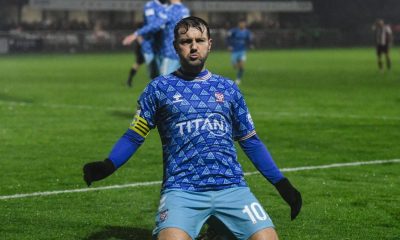
Non-league is where dreams get stress-tested. Floodlights hum, legs feel heavy, and the weather has no sympathy. Players learn to handle contact and imperfect surfaces, and they learn fast, because jobs and travel leave no room for endless bonding.
Late bloomers stop looking like a fairy tale once you spend time around these grounds. Jamie Vardy’s rise remains the headline example: Leicester City signed him from Fleetwood Town in 2012, and the story later stretched to a Premier League title.
The global stage can begin with a short clip, a direct message, and a trial invite that lands before breakfast. Players and families juggle school, training, and travel, while trying to keep the game simple enough to play well.
When the lights get brighter, the start still matters
A player can reach Wembley or the Champions League and still remember the first coach who explained body shape on a turn. That memory isn’t nostalgia; it’s a map back to the small pitches where courage was learned in public.
Somewhere tonight, another local pitch sits under weak floodlights. A ball rolls out of a bag. A new dream begins, quietly, stubbornly.



FA Vase
Fab Fosters on a Wembley cruz


Featured
BT Calling

Dagenham & Redbridge
Dagenham & Redbridge boss Lewis Young wants to lead revival after relegation

Non-League Paper
Club allocations revealed: 2025-26 league line-ups unveiled
Follow us
Read our latest news on any of these social networks!



Tackle the News
- Sign Up for our weekly Non-League Newsletter