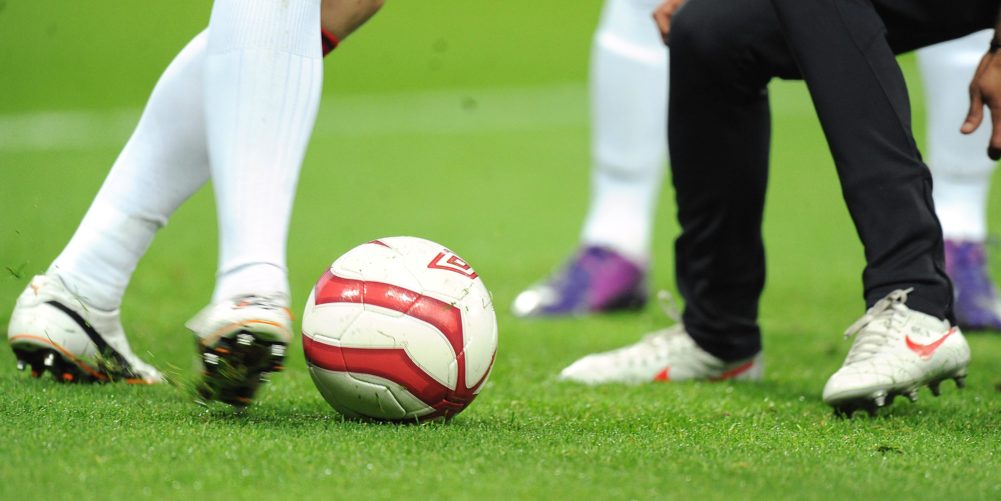

Soccer is a sport that is widely practiced all over the world and is also one of the most popular. It is a game with a lot of strategy in which two teams of 11 players each are faced with the mission of directing the ball into the opposite goal following specific rules. As everyone knows, the winner of the game is the one who scores the most goals. What not everyone knows is who will win every game, but for that you can always look for a full time draw prediction site.
The rules state that the ball can only be moved around the court with the legs. So, it is totally forbidden to even touch it with the hands or arms and this is only allowed to the goalkeeper in a limited area.
The origin of this game, although not defined by research, dates back to ancient times. There is evidence that this sport was practiced in Japan around the third century BC, which was held in honor of the Emperor. In China, a very similar discipline was practiced where a leather ball was kicked, called “Tsu-chu”.
Later, this sport spread to Greece and then to Rome. In Greece, during the commemoration of the Olympic Games, a similar game was included. In Rome, two similar games were included: the “Harpastum” and the “Follis”.
Football was becoming so popular that in the year 1300 in Pisa, Italy, it was even banned, a situation that changed over the years, with the sport being considered an ideal means of physical and personality development.
British schools were the ones that promoted modern soccer, eliminating the violence of its practice of so much contact and transforming it into a game of more strategy. For that reason, it is said that England is one of the fathers of soccer since it allowed its regularization and institutionalization and where the first formal rules were created that founded its practice.
By 1850, the creation of several clubs in England, independent from schools, was initiated. The appearance of more and more teams was the reason for the formation of the Football Association (FA) in 1863 and later the International Federation of Association Football (FIFA), the current main body of the sport.
Today, millions of people play the sport professionally or as amateurs and many more are the fans of a team who support their teams in all their games. With the evolution of soccer, betting was also generated and soccer predictions about which team would win were common, helping to make a bet with more probability of obtaining income.




Featured
BT Calling

Dagenham & Redbridge
Dagenham & Redbridge boss Lewis Young wants to lead revival after relegation

Non-League Paper
Club allocations revealed: 2025-26 league line-ups unveiled
Follow us
Read our latest news on any of these social networks!


Tackle the News
- Sign Up for our weekly Non-League Newsletter