
OLDHAM ATHLETIC v SOUTHEND UNITED

Today, ko 3pm, at Wembley Stadium

TWO fallen giants. Two play-off underdogs. Two shots at salvation. But who will reclaim their ancestral seat in the EFL?
Between them, Southend and Oldham have spent over two centuries in the top four tiers of English football.
The Latics, famously, were founder members of the Premier League, a gilded era under the management of Joe Royle that also saw them lose a League Cup final to Brian Clough’s Nottingham Forest and two FA Cup semi-final replays at the hands of Manchester United.
Southend never scaled such heights – their big claim to fame is unleashing a young Stan Collymore – but the Shrimpers’ unbroken 101-year stint in the EFL was rarely imperilled, and pockmarked by occasional forays into the second tier.
They even beat Man United, a Freddie Eastwood free-kick downing a team featuring Wayne Rooney and Cristiano Ronaldo on a memorable night at Roots Hall in 2006.
Yet all that history and tradition and steadfastness provided no protection against the twin forces of nouveau-riche rivals and questionable governance. By 2022, both had tumbled into the National League, and neither looked equipped for a quick escape.
Oldham, relegated in 2022, were the quintessential omnishambles, a club driven to the brink of ruin by meddling owner Abdallah Lemsagam.
A former agent, the Moroccan wasted millions on substandard players dredged from the French lower leagues, and allegedly forced a succession of managers to play them.
One such import, Queensy Menig, signed a two-year, £11,500-a-week contract, yet played just four times.
Occasionally, managers turned up at training to find a gaggle of teenage trialists sitting in reception with their suitcases, all far below the level required. Meanwhile, the Latics’ Chapel Road training ground collapsed into disrepair.
Southend’s decline was more insidious, less dramatic, but strikingly similar. Property developer Ron Martin took ownership in 1998 with the primary (many fans would say sole) aim of selling Roots Hall and relocating the club to an out-of-town site at Fossetts Farm. It never happened.
Perma-protest
He always insisted – and still does – that he loved the club. Yet over a period of 20 years, Southend were summoned to court 18 times for missed payments to HMRC, whilst facilities crumbled, staff went unpaid and Martin took private helicopter trips to watch the races at Ascot.
By the time they careered into Non-League on a tide of back-to-back relegations in 2021, supporters were camped outside Martin’s leafy Essex residence in perma-protest, begging him to sell up.
Had nothing changed, it is highly probable that both clubs would have suffered another relegation, or even gone out of business entirely.
Fortunately, rescue was at hand. For Oldham, it came in the shape of Frank Rothwell, a septuagenarian local businessman who divides his time between running the Latics and rowing solo across the Atlantic to raise money for charity.
“My family have been looking for something to invest in for quite a while,” he said after buying out Lemsagam in July 2022. “It’s a new era, a new chance and a new start.”
Southend’s saviour also crossed an ocean, albeit courtesy of Qantas. Australian Justin Rees, who’d made his fortune by selling an IT company, watched Welcome to Wrexham, and was instantly bewitched by the prospect of reviving a downtrodden club.
He attended matches, met long-suffering manager Kevin Maher and set about emailing local businessmen and entrepreneurs in a bid to build a consortium.
“I felt like it needed to be a Southend story,” he told The Guardian last year. “A bunch of football fans sharing the load.”
Rebuilds
The deal to oust Martin was – perhaps unsurprisingly – painstaking and fraught. Southend literally came within minutes of extinction before an agreement was reached in October 2023, and even that wasn’t the end of the saga. Eventually, though, Rees seized control.
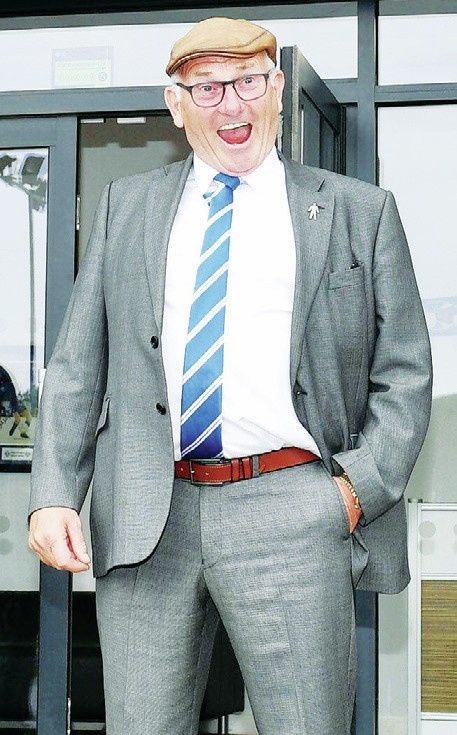
Rees and Rothwell, right, are wealthy, but neither is Ryan Reynolds. The revivals of Southend and Oldham were not turbocharged by global marketing and Hollywood glamour, nor by the mammoth wages that have since propelled Wrexham to the Championship.
It has largely been about undoing years of neglect; improving facilities, re-engaging with supporters, rebuilding community ties and constructing squads capable of competing for a return to the EFL.
For Oldham and Rothwell, the appointment of serial winner and National League veteran Micky Mellon in October 2023 was a naked statement of that intent.
The Scot, who is seeking a third promotion to the EFL after previous successes at Fleetwood and Tranmere, has transformed Oldham from a humdrum m mid-table outfit into one that comfortably finished fifth fth in the regular season and then breezed through two playoff rounds by an aggregate scoreline of 7-0.
Transfer windows helped, of course. Yet the bulk of the squad –Charlie Raglan, Josh Lundstram, Mike Fondop, Mark Kitching – were all in the team that finished a distant t tenth last term.
Little wonder that Rothwell was caught on camera mouthing an emotional ‘Thank You’ to Mellon after the semi-final victory over York.
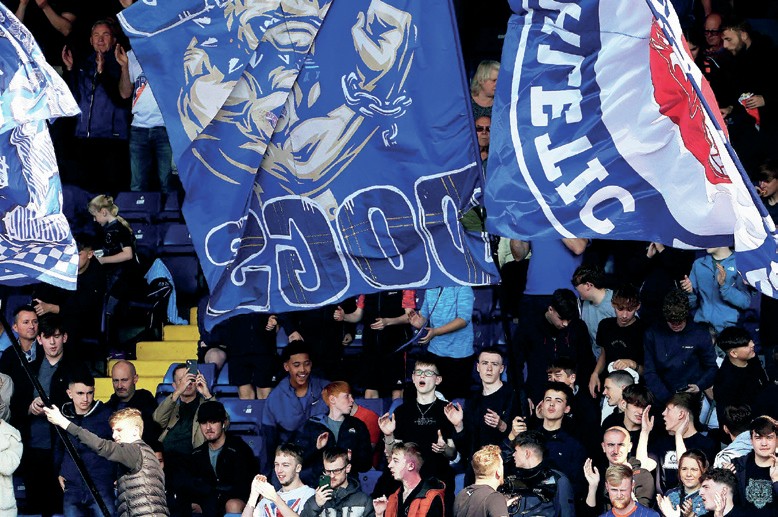
Some fans, it must be said, are less enamoured. Mellon’s pragmatic approach has divided supporters, with a decent number viewing their football as a means to an end to be endured rather than enjoyed. Any lingering discord, however, will be parked for their first Wembley appearance in 35 years.
For Maher, sensibly retained by Rees, there are no such concerns. A Southend legend as a player, the 48-yearold’s status was only enhanced when he gritted his teeth and slogged through the absolute worst of the Martin era, overcoming points deductions, late wages and even an absence of running water to keep the Shrimpers competitive.
Maher has now been involved in more Southend matches than anyone else in the club’s history and his belated testimonial, held last month, was attended by 2,600 fans.
Writing in the programme for that game, Rees said: “There are plenty of ways to judge someone’s contribution in football – games played, points won, trophies lifted – but there are other qualities that matter just as much. Resilience, loyalty, and the courage to stand up and be counted when needed most. Kevin has shown all of these.
“He’s been part of big successes as a player, but also stepped up in the darkest days as a head coach, shouldering immense pressure, and leading with integrity. For that, we are sure all Southend fans will be forever grateful.”
Complete the job at Wembley and that gratitude will be multiplied tenfold, and the Shrimpers can certainly take heart from history.
Maher’s men have taken four points off Oldham in each of the last two seasons and produced one of their best performances of the campaign in a 1-0 victory at Roots Hall in March. That, though, was during the La-tics’ post-Christmas slump and long before a brace of confidence-boosting demolition jobs powered Oldham through the play-offs.
Truth be told, a shot at promotion has probably come 12 months earlier than either side expected. The respective rebuilds remain at a relatively formative stage.
Yet each now has an opportunity to reward the staff and supporters who stuck around through the dark days, to repay owners who bought little more than an empty shell and to consign a historically bleak period to the past.




Featured
BT Calling

Dagenham & Redbridge
Dagenham & Redbridge boss Lewis Young wants to lead revival after relegation

Non-League Paper
Club allocations revealed: 2025-26 league line-ups unveiled
Follow us
Read our latest news on any of these social networks!



Tackle the News
- Sign Up for our weekly Non-League Newsletter